RSES Test: Free Rosenberg Self-Esteem Scale Online
Related glossary terms
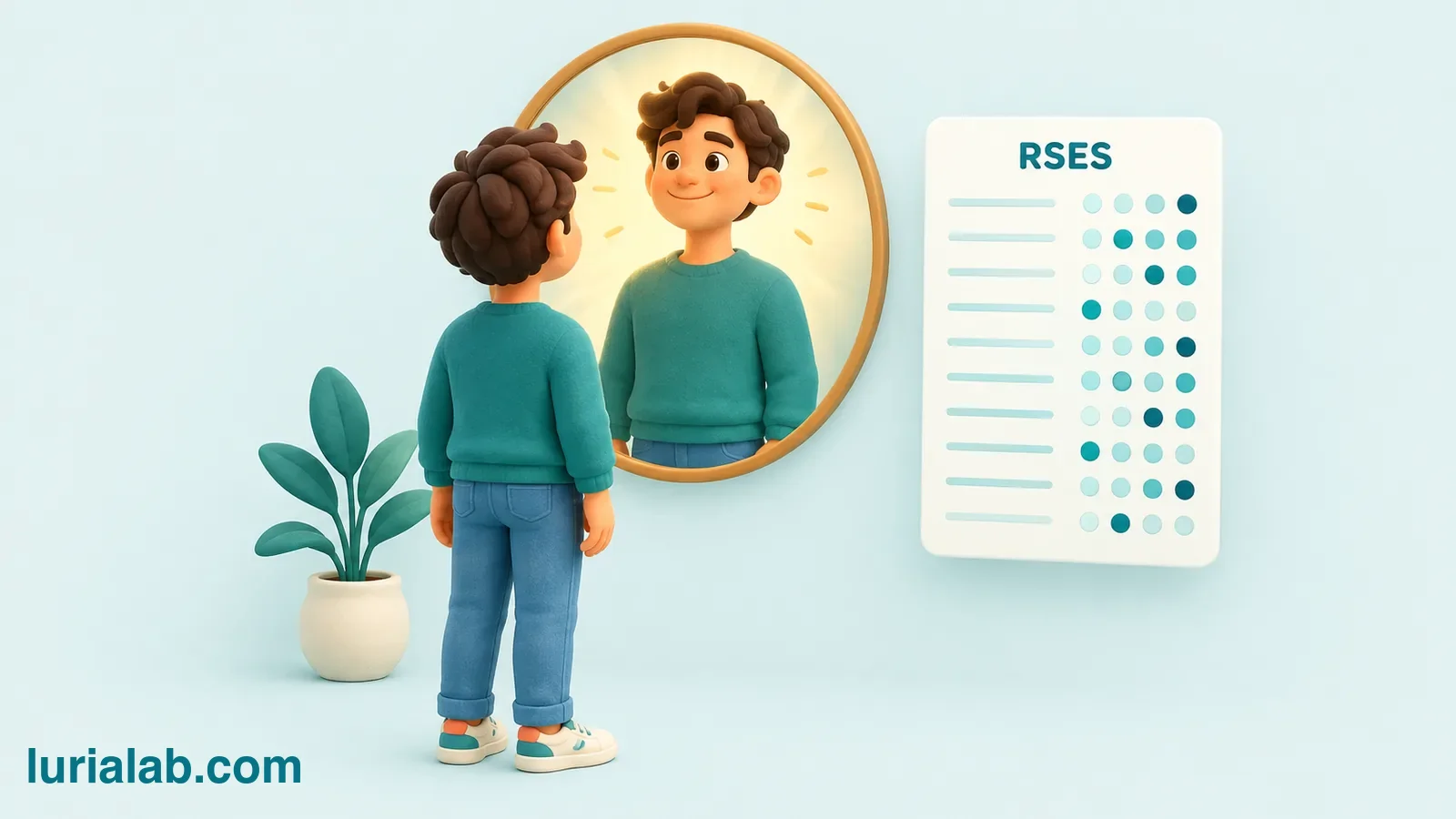
Some days the inner critic is loud. You replay a small mistake, brush off a compliment, or feel a step behind people who seem sure of themselves. That pattern has a name in psychology: self-esteem — your overall sense of worth, not a mood that swings with one good or bad afternoon. On LuriaLab you can take the free Rosenberg Self-Esteem Scale (RSES) online, anonymously, and see a scored snapshot in a few minutes.
Morris Rosenberg published the scale in 1965, and it is still one of the most used self-worth measures in research and clinics. You answer ten short statements — some warm, some harsh — from strongly agree to strongly disagree. A few items are reverse-scored so a polite “disagree” on a negative line counts as healthier, not worse. The usual total runs from 0 to 30. LuriaLab scores it for you; you do not have to do the arithmetic.
A higher total generally means a kinder, more stable view of yourself. A lower one often shows up as harsh self-talk or feeling “not enough,” even when life looks fine from the outside. Treat it as a screen, not a verdict. How you slept, a rough week at work, or a fight at home can nudge the answers. Only a clinician can say what the pattern means in your full history.
RSES is not a depression or anxiety test. The PHQ-9 asks about low mood and energy over two weeks. The GAD-7 tracks worry and tension. Those three often move together — low self-worth can sit under both — but they answer different questions. If one score stands out, the others are worth a look, not a replacement.
After you finish, sit with the number instead of arguing with it. Notice which statements stung. If the result stays low and it is getting in the way of work or closeness, talk with a therapist or GP and take the report with you. For a broader read, see our note on self-esteem in psychology. When you are ready, start the free Rosenberg Self-Esteem Scale on LuriaLab.