Panic Attack Symptoms: What They Feel Like and How Long They Last
Related glossary terms
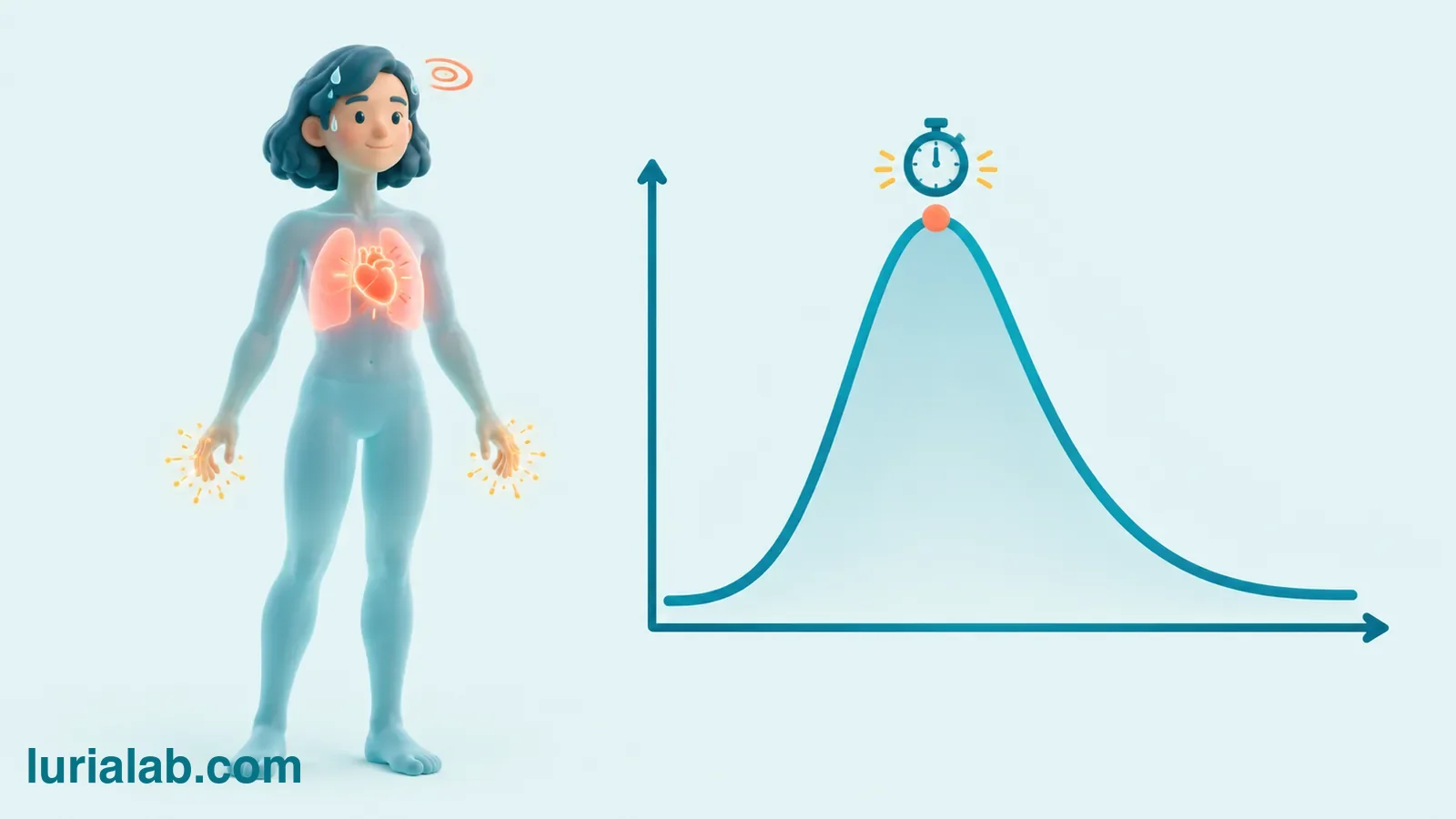
Panic attack symptoms arrive fast. A panic attack is an abrupt surge of intense fear or discomfort that reaches its peak within minutes, accompanied by at least four physical or cognitive symptoms from a recognized list of thirteen. It can happen out of a clear blue sky, with no trigger you can identify, which is part of what makes it so frightening.
The symptoms are so physical (chest pain, breathlessness, a hammering heart) that a first panic attack is very often experienced as a heart attack. This guide covers the full symptom list, how long an attack lasts, how to tell panic from cardiac emergency, and when a single attack becomes panic disorder.
What Is a Panic Attack?
A panic attack is a sudden, self-limiting episode of extreme fear and physical arousal. The body activates a full fight-or-flight response (adrenaline release, heart rate spike, rapid breathing) in the absence of any actual danger. Nothing is physically wrong; the alarm system has fired without cause.
Two things distinguish it from ordinary anxiety. First, speed: anxiety builds gradually over hours or days, while panic peaks within minutes. Second, intensity: at its height, a panic attack routinely produces a genuine conviction that you are dying, losing control, or losing your mind.
Panic attacks can be expected (triggered by a known cue, such as flying or crowds) or unexpected (no identifiable trigger, including from sleep). They occur in many conditions (not just panic disorder) and around one in three people will experience at least one in their lifetime.
The 13 Recognized Panic Attack Symptoms
Diagnostic criteria list thirteen symptoms; four or more, in an abrupt surge peaking within minutes, define a panic attack.
Cardiovascular and respiratory
- Palpitations, pounding heart, or accelerated heart rate
- Sensations of shortness of breath or smothering
- Feelings of choking
- Chest pain or discomfort
Other physical symptoms
- Sweating
- Trembling or shaking
- Nausea or abdominal distress
- Feeling dizzy, unsteady, light-headed, or faint
- Chills or heat sensations
- Paresthesias: numbness or tingling, often in the hands, feet, or around the mouth
Cognitive symptoms
- Derealization (feeling that surroundings are unreal) or depersonalization (feeling detached from yourself)
- Fear of losing control or “going crazy”
- Fear of dying
An episode with fewer than four of these is called a limited-symptom attack. It is real, it is common, and it is treated the same way: it simply does not meet the four-symptom threshold.
What a Panic Attack Actually Feels Like
The clinical list flattens the experience. In practice, people describe a fairly consistent sequence:
- A sudden physical jolt: a lurch in the chest, a wave of heat, a drop in the stomach
- The heart accelerating hard enough to be audible
- Breathing that feels blocked: air going in but not being enough
- Tingling in the fingers and around the mouth: the effect of over-breathing on blood chemistry
- Vision narrowing or brightening; sounds becoming distant or too sharp
- A sense of unreality, as if watching yourself from outside
- An overwhelming, physical urge to escape: leave the room, get out of the car, get outside
- The absolute conviction that this time something is genuinely, medically wrong
Afterwards, most people feel drained, shaky, and embarrassed, and often spend hours or days dreading the next one. That dread (anticipatory anxiety) is what turns isolated attacks into an ongoing problem.
How Long Does a Panic Attack Last?
Symptoms typically peak within about ten minutes and subside within twenty to thirty. Most attacks are over in under an hour. If intense symptoms genuinely persist for several hours without any let-up, that is unusual for panic and worth a medical assessment.
Two things commonly make attacks feel longer than they are. Adrenaline takes time to clear, so shakiness and exhaustion can linger for hours after the peak has passed. And waves of renewed fear can follow each other closely enough to feel like one continuous episode. Time perception also distorts badly during panic: three minutes can feel like thirty.
Panic Attack vs Heart Attack: How to Tell
This distinction matters, so read it carefully. General patterns that tend to differ:
- Onset. Panic peaks within minutes and then eases. Cardiac chest pain often builds and persists or worsens over time.
- Character of the pain. Panic chest pain is often sharp, localised over the heart, and may be tender to touch. Cardiac pain is more often pressure, squeezing, or heaviness in the center of the chest.
- Radiation. Pain spreading to the left arm, jaw, neck, or back is more suggestive of cardiac causes.
- Effort. Cardiac symptoms often worsen with exertion. Panic can start at complete rest.
- Tingling. Numbness or tingling in both hands and around the mouth is characteristic of over-breathing during panic.
These are tendencies, not a diagnostic test, and you cannot reliably distinguish them yourself in the moment. Call your local emergency number if chest pain is severe or crushing, spreads to the arm, jaw, neck, or back, comes with fainting or a very irregular pulse, if you have known heart disease or significant cardiac risk factors, or if this is your first episode. Being checked and cleared is the correct outcome, not an overreaction, and a normal result is genuinely useful information for treating panic afterwards.
Panic Attack vs Anxiety Attack
“Anxiety attack” is not a clinical term, which is why definitions vary. People generally use it for something that builds more slowly, feels less catastrophic, and is attached to an identifiable worry, and it can persist for hours. A panic attack peaks within minutes, hits maximum intensity, and passes.
If your experience is mostly persistent worry with physical tension rather than sudden surges, see symptoms of anxiety for the pattern that fits better.
Nocturnal Panic Attacks
Panic attacks can wake you from sleep, usually in the first few hours of the night and out of non-REM sleep. They are not nightmares: there is no dream content, just an abrupt wake into full physical panic. They are common in people who also have daytime attacks and often prompt fear of going to sleep, which then adds insomnia to the problem. Nocturnal panic responds to the same treatments as daytime panic.
When Panic Attacks Become Panic Disorder
A single panic attack is not a disorder. Panic disorder requires recurrent unexpected attacks plus at least one month of either persistent worry about further attacks or their consequences, or a significant change in behavior aimed at avoiding them.
That behavioral change is the part that costs most. Avoiding driving, gyms, supermarkets, or public transport, always carrying water or medication, only traveling with a specific person: these reduce fear briefly and expand it over time. When avoidance spreads to places where escape would be difficult, it can develop into agoraphobia.
What to Do During a Panic Attack
- Name it. “This is a panic attack. It peaks and it passes.” Recognition reduces the fear that drives the escalation.
- Slow the out-breath. Breathe out for longer than you breathe in: roughly four in, six out. Slowing the exhale, not taking deeper breaths, is what corrects over-breathing.
- Stay put if you safely can. Leaving teaches your brain that escape was necessary. Remaining until the wave passes is how the fear loses its grip.
- Ground yourself in the room. Feet on the floor, name five things you can see, hold something cold.
- Do not fight the symptoms. Struggling adds adrenaline. Letting the wave rise and fall shortens it.
- Afterwards, note what happened: where, when, what preceded it. Patterns become obvious over a few entries and are valuable in therapy.
Cognitive behavioral therapy for panic, including interoceptive exposure (deliberately and safely bringing on the physical sensations to break their link with fear) has strong evidence and often works within a few months.
What Triggers Panic Attacks?
- Sustained stress, especially in the weeks before the first attack rather than the moment itself
- Caffeine, nicotine, cannabis, and stimulants
- Alcohol withdrawal, including the morning after heavy drinking
- Sleep deprivation
- Physical sensations misread as danger: a heart rate rise from stairs, exercise, or heat
- Confined or crowded places, or places where a previous attack happened
- Medical contributors: thyroid problems, arrhythmias, low blood sugar, asthma, and some medications
Many attacks have no identifiable trigger at all. That does not mean nothing caused them: it means the cause was internal and below conscious awareness.
How Panic Symptoms Are Measured
- PDSS (Panic Disorder Severity Scale): rates attack frequency, distress during attacks, anticipatory anxiety, agoraphobic avoidance, fear of physical sensations, and work and social impairment. The most panic-specific screen available here.
- BAI (Beck Anxiety Inventory): weighted toward physical and panic-type symptoms, useful for tracking overall symptom load between sessions.
- GAD-7: measures the background worry that so often accompanies panic.
These are screening tools, not diagnostic instruments. Their value is in giving you a number to track and something concrete to show a clinician. See also our guide to the BAI.
When to See a Doctor
Get a medical assessment after a first panic attack, so that cardiac, thyroid, respiratory, and metabolic causes can be excluded. See a mental health professional if attacks recur, if you are anxious between attacks about having another, if you are avoiding places or activities because of them, if they wake you from sleep, or if you are using alcohol or drugs to prevent them. Panic disorder responds well to treatment, and the earlier avoidance is interrupted the easier it is to reverse. If you have thoughts of harming yourself, contact your local emergency number or a crisis line immediately.
Frequently Asked Questions
Are panic attacks dangerous?
A panic attack itself is not physically dangerous and does not damage the heart, even though it feels like it might. The risks are indirect: untreated panic tends to spread into avoidance, and panic attacks can occur while driving or in other situations where the loss of attention matters. Chest pain always warrants medical assessment the first time.
Can you have a panic attack without feeling anxious first?
Yes. Unexpected attacks with no preceding worry are typical, and they can happen while relaxing or asleep. The absence of a trigger is one of the diagnostic features of panic disorder, not evidence that something else is going on.
What is a limited-symptom panic attack?
An episode with the same abrupt onset and rapid peak but fewer than four of the thirteen symptoms, for example only palpitations, dizziness, and dread. It is common, particularly in people already in treatment, and it is managed the same way.
Can panic attacks wake you from sleep?
Yes. Nocturnal panic attacks typically occur in the first few hours of the night from non-REM sleep, without dream content. They frequently cause fear of sleeping, which compounds the problem, and they respond to the same treatment as daytime attacks.
How often do panic attacks happen?
It varies enormously: from several a day during a bad period to a handful a year. Frequency alone does not determine severity; the amount of anticipatory anxiety and avoidance between attacks is usually the bigger driver of impairment, which is why the PDSS scores both.
Do panic attacks go away on their own?
Individual attacks always end on their own, usually within half an hour. Whether the pattern resolves depends largely on what happens between attacks: if you avoid the situations you associate with them, panic tends to persist and spread. If you keep facing them, attacks often become less frequent over time, and treatment accelerates that considerably.
Check Your Symptoms
If you have had one or more of these episodes, a structured screen helps you describe them precisely to a clinician. The free, anonymous PDSS panic severity screen takes a few minutes and scores both the attacks themselves and the avoidance around them. If persistent worry is a bigger part of the picture, start with the anxiety symptom guide and the GAD-7 instead.
LuriaLab provides educational screening tools. They do not diagnose panic disorder or any other condition, and do not replace assessment by a qualified health professional. Seek emergency care for severe or unexplained chest pain.