How to Choose the Right Psychometric Test?
Related glossary terms
Psychometric tests help measure abilities, personality traits, and mental health symptoms in a structured way. Whether you are exploring your own wellbeing, supporting a hiring process, or preparing for a clinical conversation, choosing the right tool matters — because a poorly matched test can confuse more than it clarifies. This guide walks through practical criteria for selecting psychometric assessments, with examples of validated screening tools available on LuriaLab.
1. Start With a Clear Purpose
Decide what question you need answered before you pick a questionnaire:
- Clinical screening — flag symptoms of depression, anxiety, ADHD, or distress to discuss with a professional
- Personality / strengths — describe trait patterns (for example Big Five dimensions)
- Workplace / career — explore fit, burnout risk, or soft-skill tendencies (still not a hire/fire verdict on its own)
- Research / education — collect structured responses for learning or study design
A depression screen will not answer a personality question, and a personality inventory will not diagnose a mood disorder. Matching purpose to instrument type is the most common mistake people make.
2. Prefer Reliability, Validity, and Transparent Scoring
Strong psychometric tools usually have:
- Reliability — consistent results when the construct is stable
- Validity — evidence that the test measures what it claims
- Clear scoring and interpretation ranges — so results are not pure guesswork
- Peer-reviewed or widely used clinical/educational history
Be cautious with viral quizzes that have no published methods, no cutoffs, and no disclaimer that screening is not diagnosis.
3. Check Language, Culture, and Accessibility
A test should be available in a language you understand well, with items that make sense in your cultural context. Also consider time burden, reading level, mobile usability, and whether you need anonymous online access. LuriaLab focuses on brief, widely used self-report screens that many clinicians recognize.
4. Know What Screening Can and Cannot Do
Most online mental health questionnaires are screening aids. They summarize recent symptoms; they do not replace a clinical interview, medical evaluation, or formal diagnosis. High scores suggest “talk to a professional,” not “you definitely have disorder X.”
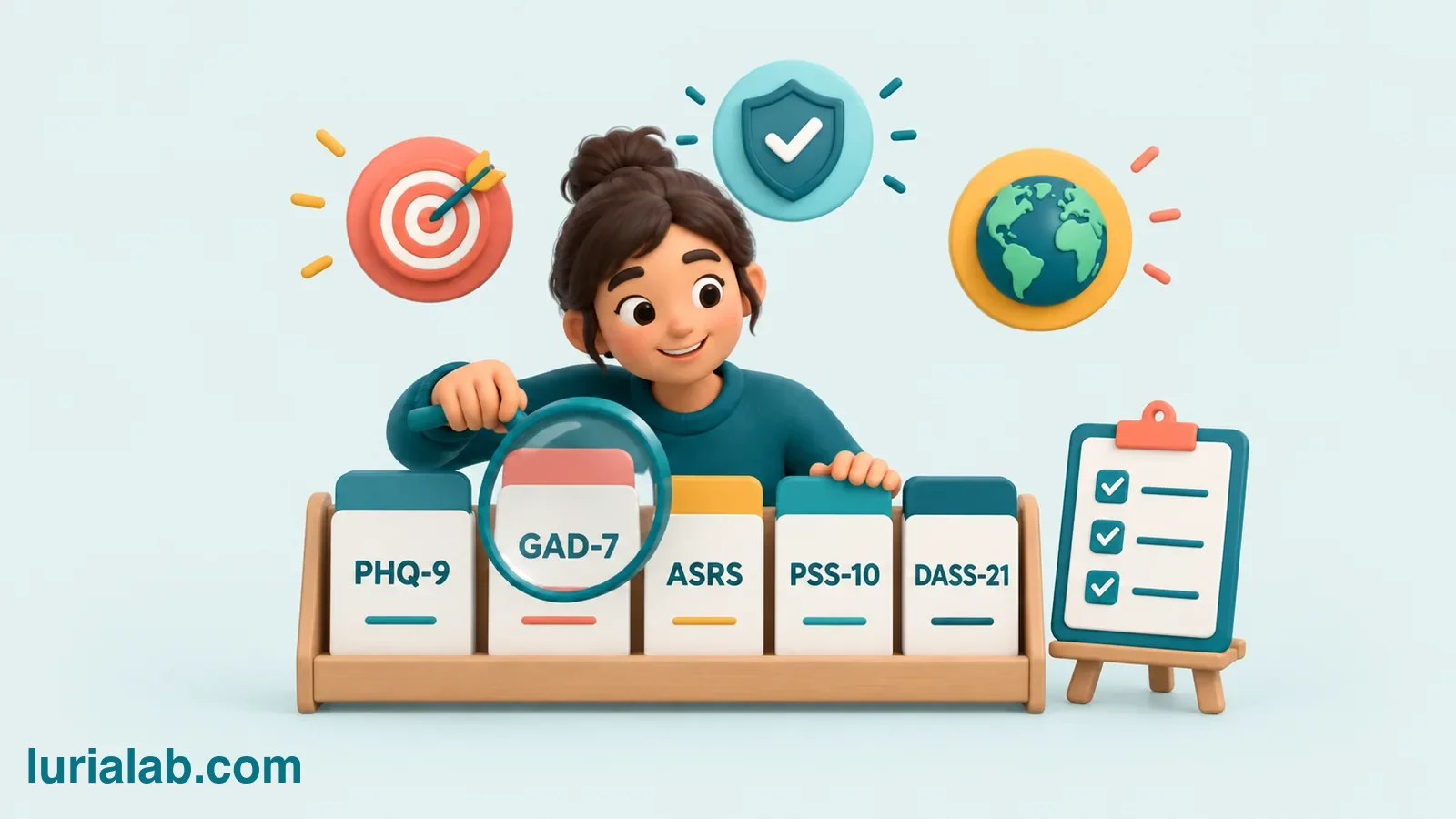
5. Examples of Validated Tools on LuriaLab
- Big Five (IPIP) — personality trait profile (openness, conscientiousness, extraversion, agreeableness, neuroticism)
- GAD-7 — brief generalized anxiety symptom screen
- PHQ-9 — brief depression symptom screen
Pick the instrument that matches your goal, then treat the score as a conversation starter — especially if symptoms interfere with work, relationships, sleep, or safety.
6. Practical Checklist Before You Start
- Is the purpose clinical screening, personality insight, or something else?
- Is the tool validated and clearly scored?
- Do you understand the disclaimer (screening ≠ diagnosis)?
- Will you share results with a qualified professional if they look concerning?
- Are you in crisis? If yes, skip self-tests and seek urgent help first.