PHQ-9 Depression Test: Free Online Screening & Score Meaning
Related glossary terms
Low energy, little interest in things you used to enjoy, restless sleep, and a mind that feels heavy for weeks — if this sounds familiar, you are not alone. The PHQ-9 (Patient Health Questionnaire-9) is one of the most widely used tools to screen for depression symptoms. On LuriaLab you can take the free PHQ-9 depression test online in a few minutes, anonymously, and get instant scoring with clear severity bands.
What Is the PHQ-9?
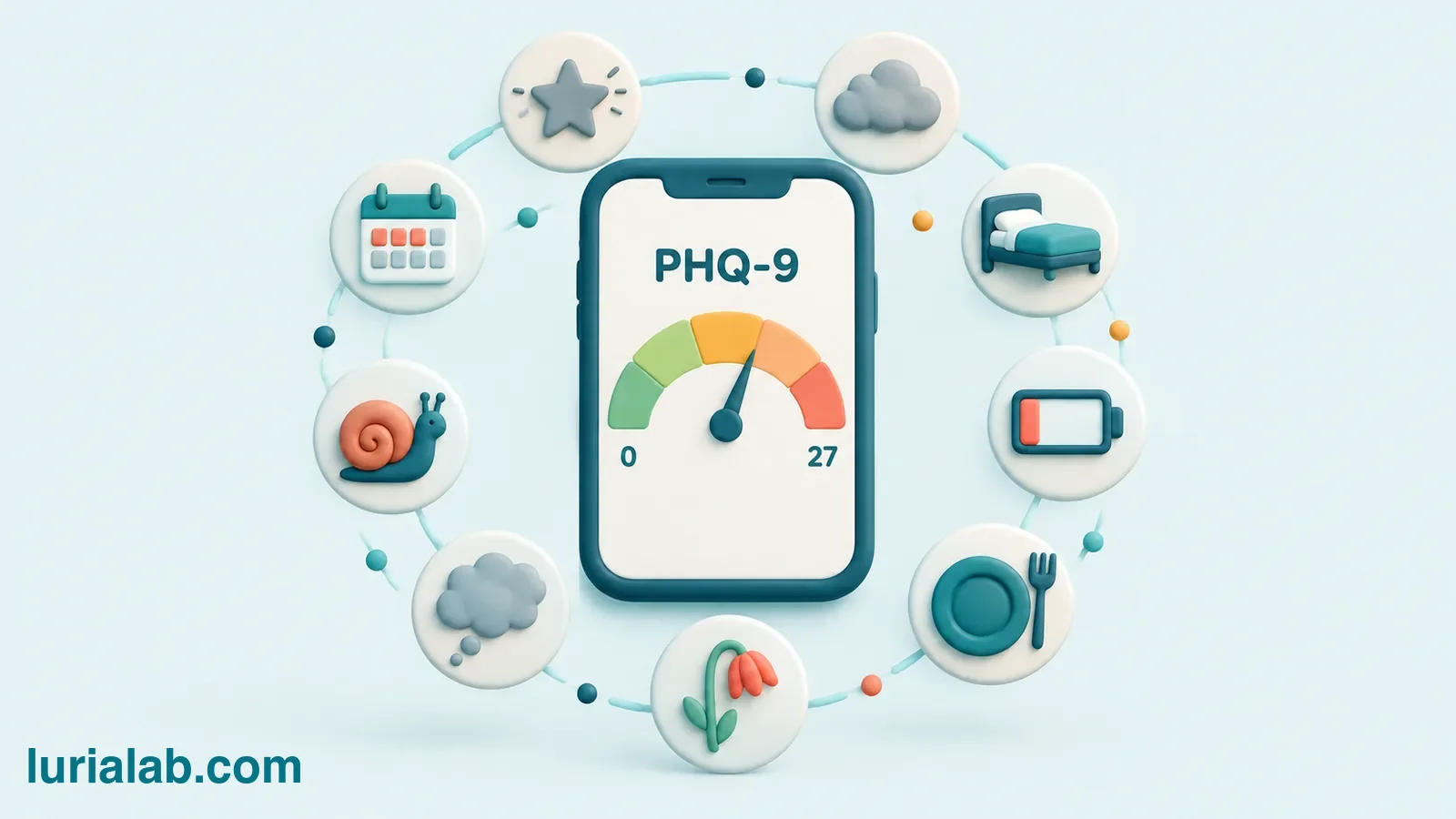
The PHQ-9 was developed by Drs. Robert L. Spitzer, Kurt Kroenke, and colleagues and is used in primary care, therapy, and research worldwide. It asks nine questions about depression symptoms over the past two weeks — such as little interest or pleasure, feeling down, sleep changes, fatigue, appetite changes, self-criticism, concentration problems, moving slowly or feeling restless, and thoughts of self-harm. Each item is scored 0–3, for a total of 0–27.
PHQ-9 Score Ranges
- 0–4: Minimal depression
- 5–9: Mild depression
- 10–14: Moderate depression
- 15–19: Moderately severe depression
- 20–27: Severe depression
These cutoffs help you understand symptom severity on this screen. A higher score suggests it may be useful to speak with a licensed mental health professional for a full evaluation. Item 9 (thoughts of being better off dead or of hurting yourself) should always be taken seriously — seek urgent help if you are in crisis.
Who Should Take a PHQ-9 Screening?
Adults who notice persistent low mood, loss of interest, sleep or appetite changes, or difficulty concentrating may benefit from the PHQ-9. Clinicians also use it to track progress during treatment. The test is a screening tool, not a diagnosis — only a qualified professional can determine whether you have major depression or another condition.
PHQ-9 vs GAD-7 and DASS-21
- PHQ-9 — focused 9-item depression screen (past two weeks)
- GAD-7 — focused 7-item anxiety screen (often taken together with PHQ-9)
- DASS-21 — three subscales in one 21-item test (depression, anxiety, stress)
Many people take PHQ-9 and GAD-7 together because low mood and worry frequently overlap. Read our GAD-7 anxiety test guide if anxiety is also a concern. For a plain-language overview of depression, see the depression glossary entry.
Can You Trust an Online PHQ-9 Test?
Yes, when it follows the standard PHQ-9 items and scoring. The scale has strong research support for detecting depression symptoms in community and clinical samples. Online self-report works best when you answer honestly about the last two weeks. LuriaLab applies official scoring automatically so you see clear results with severity bands and a downloadable report.
What to Do After Your Results
- Review your score band and notice which symptoms scored highest.
- Consider related screeners — anxiety, stress, and self-esteem issues often overlap (e.g. GAD-7, DASS-21, RSES on LuriaLab).
- Seek support if symptoms persist — therapy (especially CBT or interpersonal therapy), lifestyle changes, and medical care can all help.
- Share results with a clinician if you want guidance on next steps.
- Get urgent help if you have thoughts of self-harm — contact emergency services or a crisis line such as 988 in the United States.
Take the Free PHQ-9 on LuriaLab
Ready to check your depression symptoms? Take the PHQ-9 on LuriaLab — free, private, and available in multiple languages. You will get instant scoring and a downloadable report to discuss with a professional if you choose.