What Is Emotional Intelligence and How Can You Develop It?
Related glossary terms
In the same situation, one person stays calm while another explodes. A friend reads your feelings without you saying a word; someone else hears offense in every comment. Often behind these differences lies emotional intelligence — the ability to understand your own emotions and those of others, manage them, and use them purposefully in relationships.
Emotional intelligence (EQ) is not the same as classic intelligence (IQ). IQ helps with logical problems; EQ can support lasting success in what matters most — family, work, friendship, and self-respect. Psychology has studied this skill for decades and treats it as something you can develop.
Core components of emotional intelligence
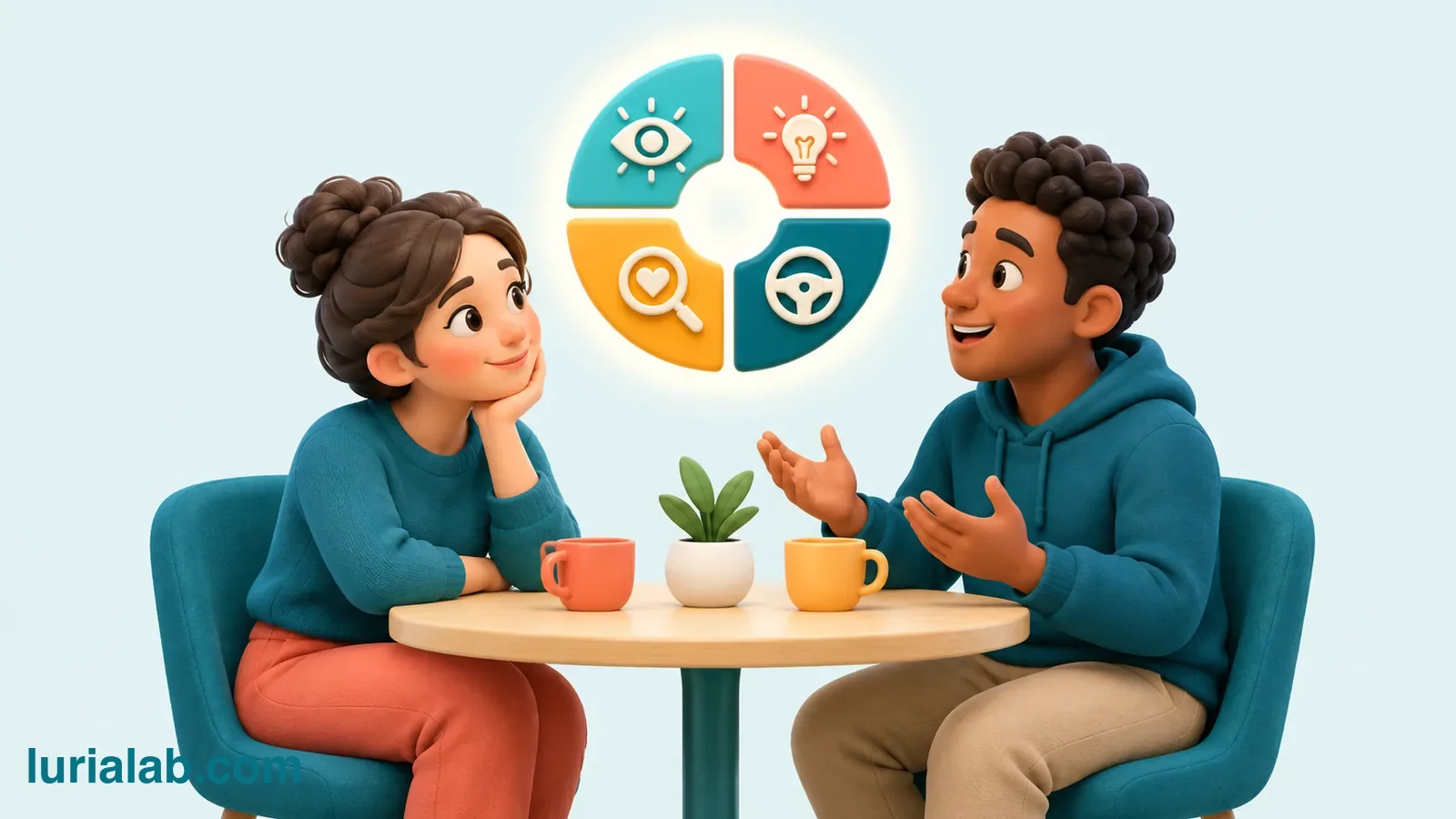
Research often divides emotional intelligence into several areas. In Schutte and colleagues' model, four main domains stand out:
- Perceiving emotions — reading feelings in your own and others' faces, voices, and body language
- Using emotions — harnessing feelings to support motivation, attention, and thinking
- Understanding emotions — naming what you feel and seeing cause-and-effect links
- Managing emotions — regulating tension, anger, sadness, or excitement in healthy ways
These four areas work together: it is hard to manage what you do not feel, and hard to change what you do not understand.
Why does it matter?
High emotional intelligence is not a guarantee of happiness, but it can help in daily life:
- Relationships — easing conflict, building empathy, setting clear boundaries
- Work and teams — deciding under stress, accepting feedback, building trust as a leader
- Self-care — spotting early signs of burnout, anxiety, or low mood
- Parenting and education — reading a child's emotional needs more accurately
When emotional intelligence is lower, people may react impulsively or feel more hopeless or isolated. EQ is better seen as a practical part of mental well-being, not just a “soft skill.”
Is emotional intelligence innate or learned?
Both. Temperament and childhood experiences can make some people quicker to read emotions or stay calmer. Yet therapy, coaching, mindfulness, and daily practice can strengthen emotional skills — especially naming feelings, pausing before reacting, and communicating healthily.
Practical steps:
- “What am I feeling now?” — ask yourself several times a day; naming an emotion often softens it
- Pause before reacting — take a breath before sending a message or making a decision
- Active listening — repeat back what you heard to check understanding
- Body signals — tight jaw, fast breathing, or shoulder pain can be stress barometers
- Professional support — ongoing anger, sadness, or relationship problems may improve with a psychologist or coach
How can you measure emotional intelligence?
Calling yourself “emotional” or “not emotional” is subjective. Validated questionnaires offer a more structured view through self-report. On LuriaLab, the SSEIT (Schutte Self-Report Emotional Intelligence Test) — a free 33-item screening — gives a total self-reported emotional intelligence score with interpretation.
SSEIT does not diagnose personality or psychiatric conditions; it reflects how you currently rate yourself. Repeating the test over time — for example after therapy or stress-management work — can help track progress.
Emotional difficulties often overlap with anxiety or low mood. For extra context you can also take the GAD-7 anxiety screening and PHQ-9 depression screening on LuriaLab — free and anonymous.
What to do after your results
- Read your score calmly — a lower score is not a moral judgment; it highlights areas to grow
- Pick one skill to practice — such as naming emotions or pausing under tension
- Small, steady steps — one skill per week, not everything at once
- Seek a professional if needed — a psychologist or coach can tailor a plan
Start with the free SSEIT test
Want a clearer picture of your emotional intelligence? Take the SSEIT emotional intelligence test on LuriaLab — free, anonymous, with instant scoring. You can download your report to share with a professional if you choose.